How Top Franchise Brands Are Using Territory Data to Sell More Franchises
Franchise candidates want proof, not pitches. The brands closing more deals are bringing territory data — market availability, unit potential, site-level projections — into every qualifying call and Discovery Day.

The franchise candidate sitting across the table from you doesn’t want a pitch. They want proof. They want to know what market is available to them, what it’s worth, how many units it can support, and what the path to profitability looks like in their specific territory — not in general. The franchise sales conversations that close fastest aren’t the ones with the best deck. They’re the ones where the franchisor shows up with territory data the candidate can’t get anywhere else.
That shift is already underway at the brands doing the most serious franchise growth. Territory data has moved from a back-office planning tool to a core part of the franchise sales strategy itself — and the development teams using it are closing more deals, with stronger candidates, in less time.
Why the Old Franchise Pitch Is Losing to the New One
Franchise candidates in 2026 are more sophisticated than they were five years ago. Many are already experienced operators from your brand or others. Most have studied the FDD before their first call, researched the brand extensively, and already formed a working theory of whether this opportunity is right for them.
The stakes have risen with the sophistication. A growing share of the best candidates aren’t signing for a single unit — they’re evaluating multi-unit or area-development deals, often with significant capital, debt, and personal guarantees on the line. A candidate putting that much at risk isn’t going to decide off a brand story.
What they can’t do on their own is see what your brand sees about their market.
The old pitch leads with brand story, support model, and system-average unit economics. The new pitch leads with a specific territory and a specific projection of what a unit there could perform. The brand story still matters — but the proof is what moves the deal.
What Can Territory Data Do for a Franchise Sales Team?
Territory data isn’t a single metric. It’s a layered view of a specific geography — demographics, competitor presence, customer behavior — combined with a site-level revenue projection your team can defend.
Used well, it does four things for franchise development:
- It answers the candidate’s first real question. Every serious candidate eventually asks, “how do I know this market will work for me?” Territory data lets you answer that the same day it’s asked, with specifics.
- It sharpens your ideal-candidate profile. When you know which territories are most valuable, you know which candidates to prioritize — the ones with the capital, operational experience, and geographic fit for the markets you most want to award.
- It accelerates the discovery process. Candidates spend less time in indecision when the territory picture is clear. Serious candidates move toward Discovery Day faster. The ones who aren’t a fit self-select out.
- It keeps the wrong deals out of the pipeline. Awarding a franchise to the wrong operator in the wrong market costs the brand for years — a struggling unit, a frustrated franchisee, and a drag on the territories around it. Data-informed awards reduce that risk and protect every existing franchisee at the same time.
It also changes how candidates read financial performance data in an FDD. Instead of trying to figure out what a system-wide average means for them, a candidate can compare those numbers directly against what their specific territory is projected to do. The brand’s numbers get easier to trust, and the conversation gets easier to move forward.
The goal isn’t to replace the relationship at the center of franchise sales. It’s to give that relationship something concrete to build on.
Where in the Franchise Sales Cycle Does Territory Data Matter Most?
Leading franchise development teams put territory data to work in three specific moments of the sales cycle. Each one compounds the effect of the others.
On the first qualifying call, territory storytelling replaces brand storytelling. The best reps walk in already knowing what markets the candidate could realistically operate in — population fit, competitor landscape, available territory, and a sense of unit potential. Candidates who aren’t serious self-select out faster. Candidates who are serious lean in harder.
At Discovery Day, the conversation changes again. When a candidate sees a specific territory with a specific revenue projection, the discussion shifts from “is this market worth entering” to “how do we open.” The candidate leaves with a business plan, not just an experience. And the projection is far more compelling when it’s explained in plain language than when it arrives as a black-box score.
Development teams that bring territory projections into Discovery Day routinely see a lift in their sign-after-Discovery-Day rate. The candidates who were on the fence pick up something concrete to anchor a yes to — a market, a site range, a number — rather than a system average and a handshake.
In territory design — the part candidates never see — data-built territories scale without conflict. Knowing how many units a market can support, where the natural boundaries sit, and which territories to award first prevents disputes later. Boundaries grounded in trade-area math also hold up better in the franchise disclosure conversation: when a candidate asks how their territory was drawn and whether an adjacent unit could encroach, the answer has evidence behind it, not a line that felt right on a map. That discipline shows up as more successful multi-unit expansions and a cleaner answer when the next candidate asks, “what else do you have available?”
The Franchise Sales Metrics That Shift When Territory Data Comes In
Teams that move to a territory-data-forward franchise sales process tend to see movement in the same four places. If your current numbers are flat, these are worth tracking.
- Time from first call to signed agreement. Candidates who see a clear market earlier tend to decide faster. Shorter decision cycles are a leading indicator.
- Qualified-candidate-to-award ratio. Better qualification upstream means fewer late-stage drop-offs. More of the candidates who reach Discovery Day sign.
- Multi-unit award rate. Candidates who can see three markets are easier to sign for three agreements than one at a time.
- Franchisee two-year performance. Data-informed awards reduce the rate of underperforming units, which shows up in system-wide franchisee satisfaction and in the next candidate’s due diligence.
The metric worth cutting is the time your best reps spend pulling market research by hand. That time should go back into candidate conversations, where it actually moves deals.
The Next Move for Franchise Sales Teams
Franchise Development has always been a relationship business. That hasn’t changed. What has changed is how quickly candidates expect those relationships to produce real answers about real markets.
The brands growing fastest aren’t the ones with the most elegant pitch. They’re the ones bringing territory data to every conversation, every Discovery Day, and every award decision. That’s not a change in what you sell — it’s a change in how you show up to sell it.
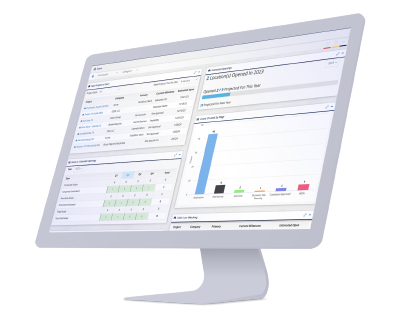
See how SiteZeus Sell brings territory data into every franchise conversation →
Qualify leads faster, increase close rates, and grow franchise sales with SiteZeus Sell.
Recommended Posts