From Lease Signing to Grand Opening: How the Best Brands Manage the Build-Out Process
Signing the lease is just the beginning — the build-out process is where timelines slip, costs balloon, and brand standards get compromised before a single customer walks in. Here’s how the best franchise brands are managing construction and opening milestones to open faster and stay on budget.

The moment a lease is signed, the clock starts. From execution to grand opening, a typical unit build-out spans 6–18 months. Within that window, there are dozens of handoffs — between real estate, legal, architecture, construction, operations, vendors, and the franchisee or operator. Each handoff is a point where something can stall, get missed, or arrive out of sequence.
Most brands know this. What separates the ones that open on time and on budget from the ones that don’t isn’t the process they have on paper — it’s the discipline and visibility they maintain through every stage of execution. Here’s a stage-by-stage look at what the best brands actually do differently.
Stage 1: Lease Execution to Permit Submission
The weeks immediately after lease signing are high-activity and often under-structured. The real estate team closes the deal and moves on. Construction hasn’t formally started. Without clear ownership of this phase, timelines slip before a single nail is driven — and most brands don’t realize it until Stage 2 is already delayed.
What the best brands do differently: they treat this phase as construction prep, not a handoff gap. Everything that can be advanced before permit approval is advanced before permit approval.
- Design finalization. Floor plans, equipment layouts, and finish specifications locked before permit submission. Changes after submission restart the review clock — a mistake that costs weeks, not days.
- Contractor selection and agreements. General contractor confirmed, agreements executed, and build team briefed before permits are approved. Brands that wait until permit approval to engage contractors add avoidable time to every subsequent stage.
- Permit application preparation. Every jurisdiction has its own requirements, review timelines, and variance processes. Submitting a complete, jurisdiction-specific application on the first attempt is the single most effective way to prevent downstream delays.
Who’s involved: Real estate, legal, architecture and design, construction lead, franchisee or operator.
What to track: Design finalization status, contractor agreements signed, permit application submitted, submission date confirmed and on record.
Key milestone: Permit application filed with a complete, jurisdiction-reviewed package.
Stage 2: Permit Approval to Construction Start
Permit review timelines vary significantly by jurisdiction — from a few weeks to several months in markets with longer review cycles. This is one of the hardest phases to plan around, and one where passive waiting is the costliest mistake.
What the best brands do differently: they treat permit review as an active phase, not a waiting period. They’re tracking application status, responding to correction requests within days rather than weeks, and mobilizing the construction team before approval so day-one on site happens fast once permits clear.
- Active permit status tracking. Knowing where an application sits in the review queue, whether additional information has been requested, and what the projected approval window looks like.
- Variance and correction response. Most jurisdictions request at least one correction or clarification. Response speed directly affects approval timelines — the best brands have a designated contact who owns this.
- Construction mobilization. Contractors briefed, materials procurement initiated, and subcontractors lined up before permits clear. Brands that engage contractors after approval add weeks to every build.
Who’s involved: General contractor, local municipality or permit office, construction manager, franchisee or operator.
What to track: Permit application status, expected approval window, open correction requests from the reviewing jurisdiction, contingency plan if approval extends beyond projected date.
Key milestone: Permit approved and construction start date locked — within days of approval, not weeks.
One thing that accelerates this phase consistently: brands that have opened in a given market before understand the specific permit review dynamics for that jurisdiction. First-time openings in a new market carry more timeline uncertainty and benefit from earlier application and more schedule buffer.
Stage 3: Construction Through Punch List
Once construction begins, the priority shifts to milestone completion against the projected timeline. Most projects don’t fail in a single dramatic moment — they slip in small increments that compound. A framing delay pushes the electrical inspection. An inspection delay pushes the flooring install. Individually manageable; cumulatively, they move the opening date.
What the best brands do differently: they track at the milestone level, not the stage level. “Construction in progress” tells you nothing useful. Knowing that framing is complete and rough electrical inspection is scheduled for Thursday — and that the flooring install starts the day after inspection sign-off — tells you whether you’re on track.
- Milestone tracking at the task level. Framing complete, rough mechanical and electrical inspected, drywall complete, fixture installation, final inspection scheduled — each with an owner and a projected completion date.
- Proactive inspection scheduling. Inspection wait times in some markets run one to two weeks. Scheduling inspections before the prior phase is complete — contingent on sign-off — keeps the calendar moving rather than stacking delays.
- Open items log. Punch list items documented, assigned, and tracked to resolution. A punch list without ownership is a punch list that doesn’t get finished.
Who’s involved: General contractor, subcontractors, brand’s construction manager, franchisee or operator, local inspection authority.
What to track: Milestone completion vs. projected dates, inspection schedule, punch list status, open items by responsible party.
Key milestone: Certificate of occupancy received.
Stage 4: Pre-Opening Operations Readiness
The certificate of occupancy marks the end of construction — not the end of the opening process. The window between CO and grand opening is where the operational side of a new location comes together: equipment commissioned, staff trained, inventory received, systems tested.
This stage is consistently underestimated in timeline planning. A construction delay pushes the opening date. An operational readiness gap means opening a location before it’s ready — with staff who aren’t fully trained, systems that haven’t been tested, or inventory that arrived late. The best brands treat this as a parallel track to construction, not a phase that starts at CO.
- Training completion. Staff hired, training schedules set, and completion tracked before opening day — including brand training and any market-specific preparation for franchised locations.
- Equipment commissioning. Every piece of equipment installed, tested, and signed off. Health inspection requirements met, food safety systems verified.
- Inventory and vendor coordination. Opening order confirmed, delivery scheduled and tracked, storage and receiving process in place.
- Soft open or preview period, where applicable. A limited pre-open run to identify operational gaps before full-scale opening day volume.
Who’s involved: Operations, training team, franchisee or operator, vendor partners, marketing (for opening day coordination).
What to track: Training completion by role, equipment commissioning status, inventory delivery confirmation, opening readiness score against defined criteria.
Key milestone: Grand opening date confirmed with all pre-open checklist items cleared — not just scheduled. A date on the calendar is a target. A date confirmed against a completed readiness checklist is a commitment.
What Separates Brands That Execute at Scale
The four stages above involve dozens of people, hundreds of tasks, and multiple interdependent timelines — often running simultaneously across several active units in a growing brand’s pipeline. The process is the same for most brands. What’s different at the best ones is the infrastructure that keeps it visible.
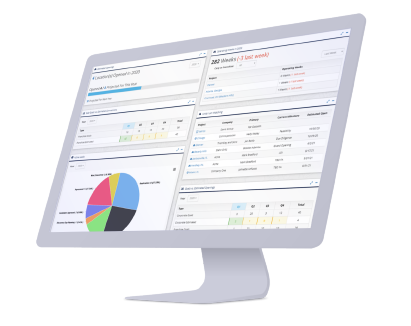
SiteZeus Build gives construction managers and operations leaders a centralized view of every milestone across every active build — ownership assigned, deadlines logged, status current. Automated alerts surface milestones at risk before they become delays, giving teams the lead time to intervene rather than react. At portfolio scale, that visibility is what separates brands that execute consistently from brands that manage openings by chasing updates.
Monitor development projects, control costs, and optimize communication with SiteZeus Build.
Recommended Posts