Why Your Top-Performing Locations Hold the Key to Your Next Market
Your top-performing locations are doing more than producing revenue. They hold the profile of the next market you should enter. Here’s how to read the signal — and the workflow to turn it into a real expansion pipeline.

Your top-performing locations are doing more than driving revenue — they’re telling you where to grow next. The same combination of factors that explains why these sites are winning — customer mix, trade-area characteristics, geographic pull — is the search pattern for the markets the brand hasn’t entered yet.
A good portfolio review usually leans on the bottom of the portfolio: catching underperformers, planning relocations, making tough renewal calls — work that protects revenue and keeps the portfolio healthy. The top of the portfolio gets reviewed too, but usually only for operational lessons to replicate across the system. The expansion signal underneath those lessons is the part that gets left on the table. Auditing the bottom protects revenue. Mining the top reveals where to grow.
Four signals top performers send about your next market
Top performers carry four kinds of signal. Each one says something different about why the location is winning — and three of the four also point at where to grow next.
Customer signal is the first — who’s actually showing up. Modern portfolio analysis can read this in detail: demographics, competitive density, traffic patterns, customer movement, consumer behavior signals, consumer interests, by neighborhood and by daypart. A top performer isn’t outperforming because of “great traffic.” It’s outperforming because a specific customer mix is showing up at a specific cadence in a specific kind of trade area. A specific mix at a specific cadence in a specific kind of trade area — that’s the profile.
Performance driver signal is the second. The raw revenue number is the outcome. The combination of factors producing it — trade-area characteristics, competitive context, customer composition — is the why. A top performer with a clear why is one that can be looked for elsewhere. A top performer with no readable why can only be celebrated.
Geographic signal is the third. How far are customers traveling to reach the location? A top site pulling customers from twelve miles away in a market without a competitor isn’t just performing well — it’s pointing at white space. The drive distance is a tell. It’s saying that the next location, in the right market, would have its own catchment instead of cannibalizing this one.
Operational signal is the fourth — what’s transferable at the unit level versus what’s site-specific. The first three signals — customer, performance driver, and geographic — are where the expansion strategy lives.
A five-step plan for turning top-performer data into an expansion pipeline
Turning top-performer signal into a real expansion pipeline takes a workflow, not a meeting. The shape of it:
- Identify your top performers. Take the top 10–15% of the portfolio by a defensible performance metric. Projected versus actual is usually stronger than raw revenue — it controls for site size and market scale. The goal is to isolate the locations that are exceeding what the model expected, not the locations that are simply big.
- Profile what they have in common. Look at trade-area characteristics, customer mix, competitive context, and market type. The output is a profile, not a list — a description of the kind of market that produces a top performer for the brand.
- Find markets that match the profile. Search the rest of the geography for markets that match the profile but don’t yet have a unit. Step three is where the review turns into a pipeline. The same analysis that produced the profile can be inverted to find the markets where that profile already exists — and where the brand isn’t.
- Pressure-test against competitive density and white space. A matching profile isn’t enough on its own — a market that already has the brand’s strongest competitor saturated is a different opportunity than a market with the same profile and no comparable presence. Layer in the competitive picture before the list goes any further.
- Build the pipeline from the validated list. Not from a wish list. The output is a ranked set of markets the brand has data-backed reasons to enter, each one tied to a top performer in the existing portfolio.
Why portfolio review and expansion planning should run on the same data
When portfolio review and expansion planning run on separate data, the link between them — the link from “here’s what’s working” to “here’s where to go next” — has to be carried over by hand. Insights from the portfolio review live in one report. The expansion plan lives in another. The connection between the two depends on someone in both conversations remembering to make it.
When both reviews run on the same dataset, that connection becomes structural. The same trade-area factors that explain why a location is underperforming explain why another one is exceeding plan — and what kind of market would produce a third one like it. Portfolio insight and expansion insight stop being two separate conversations and start being two views of the same data.
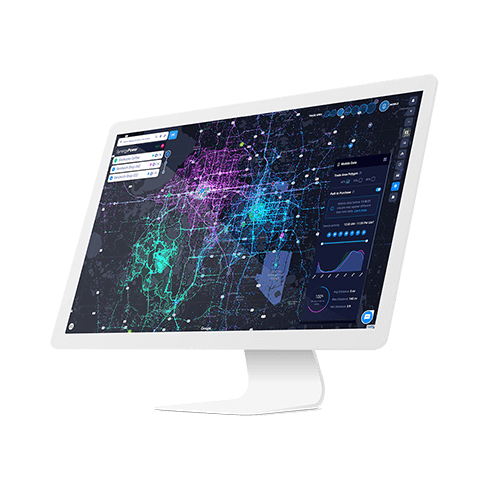
That’s the work SiteZeus Locate is built to support — connecting the analysis already running on the existing portfolio optimization review to the white space and market expansion decisions the brand hasn’t made yet. The portfolio review feeds the expansion plan instead of stopping at the report-out.
Auditing the bottom protects revenue. Mining the top reveals where to grow. Brands doing both well are turning portfolio data into pipeline.
See how SiteZeus Locate connects portfolio insight to expansion strategy.
Recommended Posts