Why The Best Franchise Territory Maps Are The Most Defensible
Defensible franchise territory maps aren’t the largest or most equal — they’re the ones you can explain. Here’s what the best maps have in common and what to look for in the tool you use to build them.
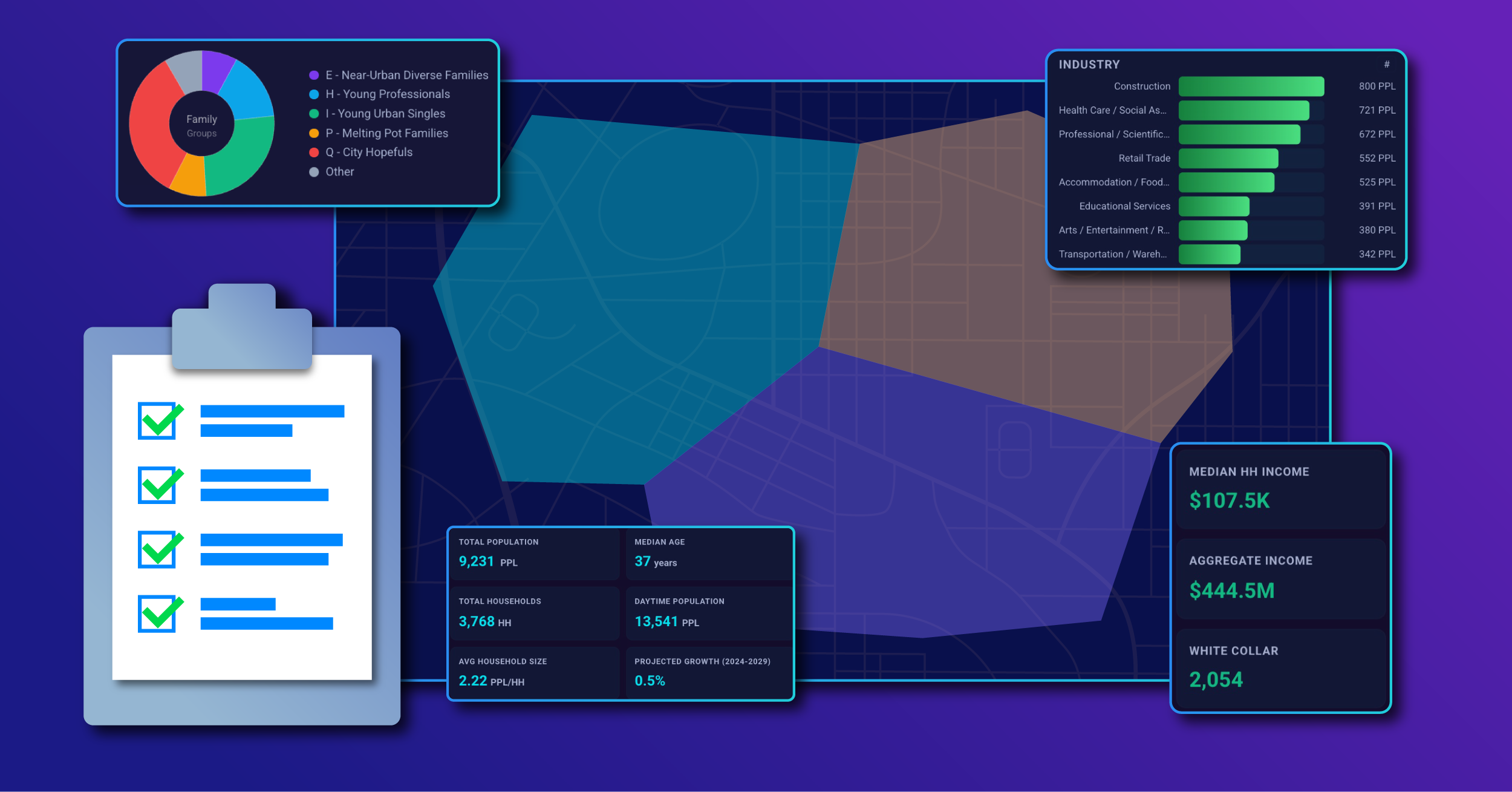
Every franchise developer has been in the conversation: a prospect looks at the map, asks why the boundary runs where it does, and waits. Answer “that’s how the system drew it,” and the prospect’s confidence drops — the boundary starts to feel arbitrary. Answer “it’s built on transaction data from your top units, weighted toward the segments that drive your revenue and balanced against the territories already on the board,” and it’s a different conversation.
Territory disputes don’t usually come from franchisees who have bad markets. They come from franchisees who don’t understand the logic behind their boundaries — or from a developer who can’t explain it clearly. The most defensible territory maps share a specific set of characteristics, and none of them are about size.
What “defensible” actually means
Before talking about what goes into a defensible territory map, it helps to define what the word means in practice. A defensible territory is not the largest territory. It’s not equal square mileage. It’s not equal population, either. A defensible territory is one that can be explained, held up to scrutiny, and still make sense as the portfolio around it grows. Three tests that tell you whether a territory will hold up:
Can you explain what it was built on? Not “the software made it” — but specifically: what data, what customer segments, what weighting criteria. If the answer to “why does the boundary run here?” requires a shrug, the territory isn’t defensible. It’s just a line.
Does it represent a fair opportunity relative to the others? Equal opportunity doesn’t mean equal geography. A territory in a dense metro with a high concentration of the right customer segments can be physically small and still represent significant revenue potential. A territory covering three rural counties might look large on a map and represent a fraction of that opportunity. Equity is in the potential, not the polygon.
Does it hold up as the portfolio grows? A territory that looked balanced when it was the twelfth one sold can look very different as the fiftieth, sixtieth, and seventieth territories are added around it. Defensibility over time requires a map that was designed to stay in balance — not one that was drawn once and frozen.
The inputs that actually drive territory value
The most common shortcut in territory design is population count. It’s easy to explain (“everyone gets a million people”) and easy to produce. The problem is that it treats all people as equally likely to be customers — and for most franchise concepts and service-based brands, that’s not close to true.
A home health services brand’s customer profile is skewed strongly by age and income. A QSR franchise’s customer is shaped by traffic patterns, consumer spending behavior, and competitive density in ways that a raw population count doesn’t capture. A territory drawn on population alone looks fair until a franchisee in a market whose demographics don’t match the brand’s customer profile compares their actual customer pool to a franchisee in a market that fits perfectly — and asks why.
The territory maps that hold up are built on the data that actually predicts which people in a given geography are likely customers. The full picture — demographics, customer movement, consumer behavior signals, and consumer interests together — is what produces a territory boundary that means something, rather than one that just divides space.
Why does this matter beyond the initial conversation? Because a territory built on the right inputs gives the franchisee a realistic picture of their actual opportunity. One built on population alone sets an expectation the market may not support — and that gap is where disputes begin.
Static maps and the problem they create
Most territory maps are drawn once. When a territory sells it gets marked off, but the boundaries around it stay put — so as sales accumulate, the territories still on the board gradually fall out of balance. A map that looked even at 20% sold can look very different at 50%, because the remaining territories were never redrawn to fit around the ones that sold. A developer selling the forty-fifth territory may be working from a map that made sense at ten and hasn’t been recalibrated since.
A territory map that updates as the portfolio builds — with the algorithm rerunning to keep unsold inventory balanced against the sold and committed territories around it — answers that question with current information instead of a six-month-old snapshot.
When the prospect asks “why here?”
The territory conversation is one of the highest-leverage moments in franchise development. A developer who can walk a prospect through the logic of their territory — not just show them the boundary but explain what it was built on and what it means for their opportunity — converts differently than one who defers to a follow-up.
The ability to pull a territory map and explain it in real time — here’s the customer segment weighting, here’s how this territory compares to the ones already sold, here’s what the opportunity looks like based on your top unit data — changes the dynamic of that conversation. “Let me get back to you” is a credibility dip every time it happens. Having the answer ready is the difference between a call that moves forward and one that stalls while the prospect’s attention drifts elsewhere.
What to look for in the tool you use to build territories
If you’re evaluating how you’re building territories today, these are the questions worth asking:
What are the territories actually built on? If the answer is population count or flat geography, the map is probably not going to hold up under scrutiny from a sophisticated franchisee. The inputs should reflect the actual customer segments that drive revenue for your specific concept.
Can the weighting be customized? Different franchise concepts have different customer profiles. A tool that can’t weight the territory algorithm toward the segments that actually matter for your brand is producing generic territories — which is another way of saying it’s producing disputes.
Does the map update as territories sell? A static map is fine until it isn’t. The value of a living territory plan is that the developer always knows what’s actually available and can show it accurately in prospect conversations.
Can you explain the output to a prospect in real time? A territory map that can only be understood by the person who built it doesn’t serve the franchise development conversation. The output should be something a developer can walk through clearly — boundary by boundary, segment by segment — in the time they have on a call.
Automated territory creation in SiteZeus Locate takes a brand’s actual transaction data and target criteria — customer segments, owner-occupied homes, age, income, consumer behavior signals, or any combination — and builds balanced, equal-opportunity territories across the country. As territories sell, the algorithm re-runs to keep the unsold inventory current. The result is a territory plan a franchise developer can show in real time and explain without a script.

Recommended Posts