Why We Rebuilt SiteZeus Locate: Building for How Expansion Teams Actually Work
The old site selection workflow was built for a different pace. Here’s why SiteZeus rebuilt Locate from the ground up — and what the Atlas release required to get right.
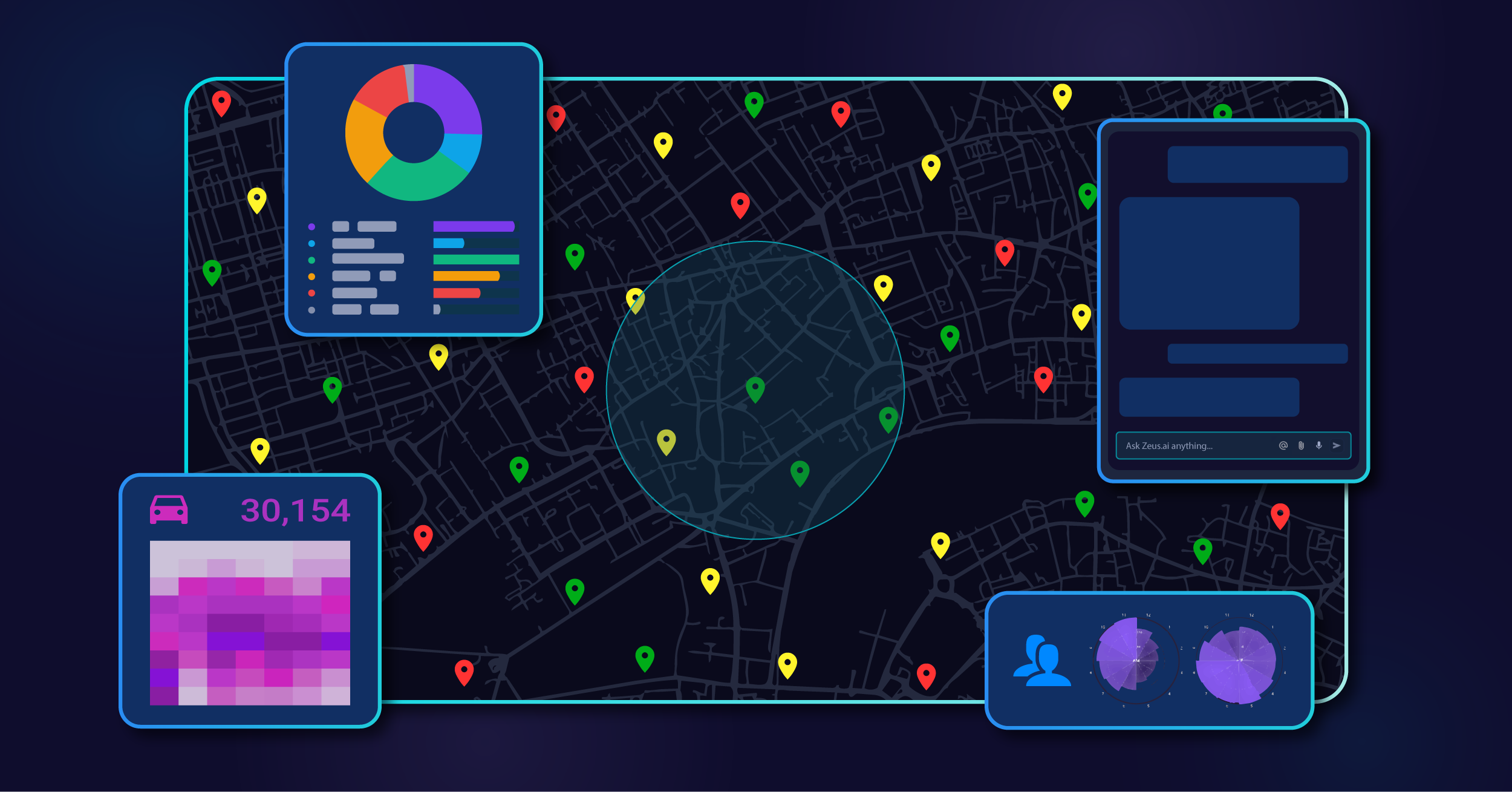
There’s a version of site selection that most expansion teams know well. You identify a market. You pull the data. You hand it to an analyst, wait for a report, and by the time the report lands in your inbox, two of the sites you were evaluating have already traded. You go back to the top of the queue.
The workflow wasn’t broken by neglect. It was built for a different pace — one where deals moved in weeks, not days, and where the number of sites an expansion team could realistically evaluate in a quarter had a ceiling nobody questioned because everyone was working within the same one. The tools reflected that reality. They were designed for analysts, built around exports, and oriented toward producing a report rather than shortening the distance between a question and a decision.
That gap between what the tools were built for and what expansion teams actually need is why we rebuilt SiteZeus Locate from the ground up. The Atlas release is the result of that work — the full breakdown of what’s new is here. What follows is the story of why we built it the way we did.
Why the path from site selection data to a decision takes longer than it should
The information that expansion teams need to make good decisions — foot traffic patterns, competitive density, demographic depth, consumer behavior signals, customer movement — has never been richer or more available. That’s not the problem.
The problem is that most of it lives in a workflow that requires an analyst to extract it, format it, and push it somewhere useful. The CDO trying to evaluate three DMAs before a Monday meeting doesn’t have a ticket in the queue. The franchise developer on a call with a prospect in a new market doesn’t have 48 hours to wait for a territory profile. The real estate director doing a site visit doesn’t have the full picture on her phone.
The data exists. The path from data to decision is where things break down.
Why site selection forecasts should come with their reasoning, not just their results
The best expansion teams have always asked sharp questions about their forecasts. That’s not new. What a good CDO or real estate committee has always wanted is to understand the why behind a recommendation — which inputs drove the number, what the competitive picture looks like, why this market ranked above the alternatives.
What changed is the tools’ ability to answer those questions in the time it takes to actually use the answer. Legacy platforms could produce a forecast. Interrogating it meant hours of additional analysis, follow-up requests, or going back to the model. The reasoning existed — it just wasn’t accessible without significant effort.
The expectation now is that the reasoning comes with the forecast. Not in a follow-up report, not after a second analyst request — in the same conversation, alongside the number. That’s a capability question, and it’s one the old architecture couldn’t answer cleanly.
Why every follow-up question in site selection shouldn’t require an analytics ticket
The teams we talked to described the same pattern: they’d get a forecast, have a follow-up question — how does this compare to our Atlanta unit’s trade area? What if we adjusted the radius? — and that question would go back to the analytics team. If they were lucky, the answer came back the same day. Usually it didn’t.
Static dashboards were built to display answers to questions someone else already asked. They weren’t built for the question that surfaces in the middle of a conversation — the one that changes everything if the answer is what you think it is.
The work of site selection is iterative. The tools mostly weren’t.
Why site selection needs to work in the field, not just at a desk
More than a few expansion teams told us that the version of their site selection platform that existed on their phone was either missing half the features or just a different experience entirely. Which meant that the decision a CDO needed to make in the field — standing in a parking lot, on a call with a broker — got deferred to when they were back at a desk.
For a discipline that runs on speed, that’s a meaningful handicap.
What building for agentic site selection actually required
There were incremental improvements we could have made. A better export function here. A cleaner mobile layout there. We looked at those options and kept coming back to the same conclusion: the architecture of the old workflow was the constraint. As long as the primary interface was a dashboard built for analysts and the primary output was a report, we were adding lanes to a road that needed a different route.
Agentic site selection — where the platform meets the expansion team in the moment, in the format they’re working in, and gives them answers in plain language they can act on and defend — required building something different.
The team who led the rebuild is sitting down for a live Q&A on June 11 at 2 p.m. ET — 30 minutes to walk through the Atlas release, show it running on real expansion questions, and take your questions.
Recommended Posts