What Makes a Site Truly Worth Signing? A Due Diligence Checklist for Real Estate Teams
The site looks great. Strong foot traffic, a solid co-tenancy lineup, demographics that match your core customer. The franchisee is motivated, the lease terms are workable, and the timeline fits the development plan. And then it opens and underperforms. Not dramatically. It’s not a failure. It just never reaches the numbers that justified the approval. […]

The site looks great. Strong foot traffic, a solid co-tenancy lineup, demographics that match your core customer. The franchisee is motivated, the lease terms are workable, and the timeline fits the development plan.
And then it opens and underperforms. Not dramatically. It’s not a failure. It just never reaches the numbers that justified the approval. The post-mortem eventually turns up something that was visible in the data before signing: a competitive entrant that had already broken ground nearby, a customer movement pattern that was shifting away from the corridor, a demographic profile that matched your customer type on the surface but not on the specific behaviors that drive your brand’s revenue.
Site due diligence is supposed to prevent that outcome. But most site approval checklists are built around the inputs that are easiest to gather, not the ones that are most predictive. Here’s what a thorough due diligence process looks like for franchise real estate teams.
The Standard Checklist vs. The Predictive Checklist
The standard site approval checklist covers the obvious requirements: minimum square footage, required co-tenancy, traffic count thresholds, parking ratios, visibility from the street. These are necessary inputs. They’re also table stakes. They tell you whether a site qualifies, not whether it will perform.
A predictive due diligence checklist goes further. It asks not just whether the site meets your minimum requirements, but whether the conditions in the trade area are likely to produce the revenue performance your approval is based on. That’s a different question, and it requires different data to answer.
The Due Diligence Checklist: Five Categories
1. Demographics and Demand Density
Start with the customer profile question: does the population within your trade area match the demographic profile of your existing high-performing locations? This goes beyond age and income. Consumer interests, household composition, lifestyle patterns, and consumer behavior signals within the trade area all affect whether your brand resonates in a specific market.
The relevant comparison isn’t “are there enough people nearby.” It’s “are there enough of the right people within a reasonable drive time, and are those people exhibiting the behaviors that correlate with high transaction volume at your brand?”
- Trade area population and household count within primary and secondary drive times
- Demographic match score against your top-performing location profiles
- Consumer interest and behavior signals in the trade area
- Daytime versus residential population balance (relevant for lunch-driven or commuter-dependent brands)
2. Competitive Density and Market Share
Competitive analysis at the site selection stage often focuses on direct competitors within a fixed radius. That’s a starting point, not a conclusion.
A thorough competitive analysis accounts for the total competitive density in the trade area: not just your primary competitors but any brand competing for the same customer occasion or consumer spending category. It also accounts for trajectory: is the competitive environment in this trade area increasing or decreasing? A market that looks manageable today may look different in 18 months if two new entrants have already signed leases.
- Direct competitor locations within primary and secondary trade area
- Competitive density trend: openings and closures in the past 12 months
- Total category competitive spend in the trade area (how much is the customer wallet being competed for?)
- Cannibalization risk from your own existing nearby locations
3. Traffic Patterns and Access
Traffic counts are a standard input. Traffic patterns are different. The question isn’t just how many vehicles or pedestrians pass the site. It’s where they’re coming from and going, and whether the natural flow of movement in the trade area brings your target customer past this location.
Customer movement pattern data answers this question directly: where are the people who match your customer profile spending their time before and after the hours when you expect peak transaction volume? A site on the correct side of traffic flow, intercepting customers on their way to a destination rather than on their way home, will consistently outperform an otherwise comparable site in the wrong position.
- Traffic volume and peak hours at the site
- Customer movement pattern analysis: is the site on the natural path of your target customer?
- Ingress and egress quality
- Proximity to demand generators (office parks, schools, residential density, transit)
4. Co-Tenancy and Trade Area Stability
Co-tenancy matters because anchor tenants drive traffic that a new location benefits from. But co-tenancy stability matters more. A shopping center with strong anchors today may look different in two years if those anchors are on their own declining trajectories.
Due diligence should assess not just who the current co-tenants are, but whether those tenants represent a stable retail environment. A site co-anchored with a category leader in a declining format is a riskier approval than the traffic counts suggest.
- Primary anchor tenant identity and stability
- Co-tenancy density and format compatibility
- Recent vacancies in the center or corridor
- Any known planned changes to the competitive or co-tenancy environment
5. Revenue Forecast Defensibility
Every site approval should include a revenue forecast, but not every forecast is created equal. The standard approach uses averages from comparable locations and applies them to the new site with adjustments for trade area characteristics. That works reasonably well for typical sites.
For sites where the trade area doesn’t closely match your existing portfolio (a new market entry, an urban format, a suburban location with unusual demographics), the comparable-based forecast can miss in ways that aren’t visible until after opening.
A defensible forecast is one built from the specific inputs of this trade area, at this site, in current market conditions: the actual demographic composition, the current competitive density, the actual traffic patterns, consumer behavior signals, and consumer interests that drive your brand’s revenue in markets like this one. That’s the standard that protects both the brand and the franchisee from an approval that looked right but wasn’t.
- Revenue forecast methodology: comparable-based or trade area-specific?
- Sensitivity analysis: what does performance look like if key assumptions shift by 10% or 20%?
- Alignment between the forecast and the financial model used to justify the franchisee’s investment
- Leadership sign-off on forecast assumptions, not just the number
Making the Checklist Work at Scale
The challenge with thorough due diligence isn’t knowing what to look at. It’s doing it consistently across every approval decision, especially as development velocity increases.
Brands that scale their approval process effectively do two things. First, they standardize the inputs: every site evaluation uses the same data categories, pulled from the same sources, measured against the same benchmarks. Second, they automate the comparison: instead of building the competitive density analysis from scratch for every site, they run every site through the same model and flag exceptions for deeper review.
When due diligence is standardized and data-driven, it also creates something valuable beyond the approval itself: a record of the assumptions that justified the decision. If the site underperforms, you know whether it’s because conditions changed or because the original analysis was flawed. That distinction matters for how you improve the process going forward.
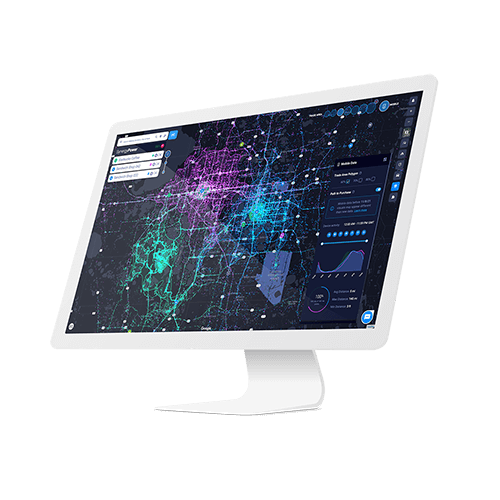
See how SiteZeus Locate can help you solve for site due diligence and site approval.
Recommended Posts