How Agentic AI Is Changing What Expansion Teams Can Get Done in a Day
It’s 8:30 on a Monday morning, and your CEO wants a recommendation on two competing markets by Friday. You know the drill: pull the demographic reports, request the traffic data, ask an analyst to model the sites, then spend Thursday night assembling a deck that explains what it all means. The analysis is a day […]

It’s 8:30 on a Monday morning, and your CEO wants a recommendation on two competing markets by Friday. You know the drill: pull the demographic reports, request the traffic data, ask an analyst to model the sites, then spend Thursday night assembling a deck that explains what it all means. The analysis is a day of work. The gathering, formatting, and reporting around it is the rest of the week.
Agentic site selection compresses that week into a day — not by cutting corners, but by handing the gathering, modeling, and reporting to AI agents that act on your behalf. This post walks through what that shift looks like in practice: which tasks move off your plate, what your day looks like when they do, and how to tell real agentic capability from a chat window bolted onto a dashboard.
What Is Agentic Site Selection?
Agentic site selection is site selection where AI acts on your behalf, not just when you ask. Instead of waiting for you to run a query, AI agents take on complete tasks — screening a market, scoring a batch of sites, drawing territory boundaries, assembling a report — and bring you the finished work to review.
That distinction matters because most AI site selection software stops at conversational. You ask a question, you get an answer, and the next step is still yours. Agentic tools carry the task through. You define the goal — “find the strongest trade areas in the Dallas suburbs and show me why” — and the agent handles the queries, the scoring, and the explanation.
Your role shifts from operator to reviewer. You spend your time judging recommendations and defending decisions, not assembling the inputs behind them.
Where the Week Actually Goes for Most Expansion Teams
Ask an expansion team where their time goes and the answer is rarely “deciding.” It’s everything around deciding.
How Long Does a Site Evaluation Usually Take?
For teams working with spreadsheets, broker packages, and a patchwork of data subscriptions, evaluating a single site takes days — and evaluating a full market takes weeks. Each site means pulling demographics, checking competitors, estimating traffic, and reconciling sources that rarely agree. Multiply that by the hundreds of locations a growing brand should be comparing, and the backlog becomes the bottleneck. Good sites trade while the analysis is still in progress.
Why Reporting Eats More Time Than Analysis
The second drain is translation. The analysis exists — somewhere — but leadership needs it as a board slide, the franchisee needs it as a one-pager, and the real estate committee needs it as a side-by-side comparison. Teams routinely spend more hours formatting findings than producing them. None of that work improves the decision. It just moves information between formats.
Add the two together and the math gets uncomfortable. A team of smart, expensive people spends most of its week on tasks that require attention but not judgment — and the tasks that do require judgment get whatever hours are left. Slow evaluation doesn’t just delay decisions; it quietly lowers their quality, because the deadline arrives before the second look does.
What a Day Looks Like When AI Agents Do the Legwork
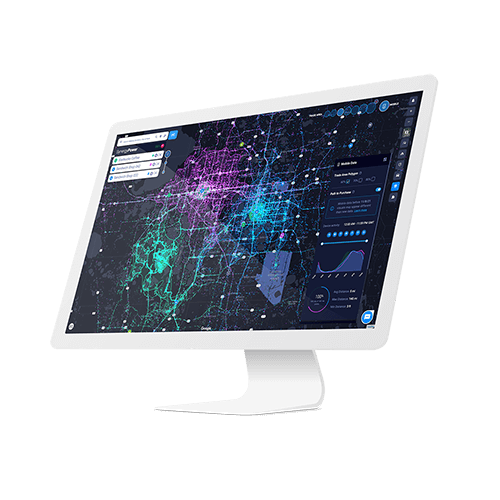
Here’s the same Monday with agentic tools in place — the workflow we built the Atlas release of SiteZeus Locate around.
Morning: you ask for a comparison of the two markets, in plain language. The agent screens both against your brand’s performance drivers, analyzing demographics, competitive density, traffic patterns, customer movement patterns, consumer behavior signals, and consumer interests. By the time you’re out of your 9:00 stand-up, every viable trade area in both markets is scored, with the reasoning behind each score spelled out.
Midday: the markets look strong, so you ask the agent to generate territory options. Automated territory creation drafts equitable, data-backed boundaries in minutes — work that used to mean days of manual map-drawing and second-guessing.
Afternoon: you ask for the reporting. Chat-driven reporting turns the analysis into a summary you can hand to your CEO — the sites, the forecasts, and the “why” behind each recommendation in plain language. The forecast isn’t a black box number; you can see which factors drove it, which means you can defend it in the room.
Late afternoon: one site in the stronger market looks compelling, so you ask what’s actually available nearby. Integrated real estate listings surface current options inside the same workflow — no separate broker email thread, no waiting until Thursday to learn the best parcel went under contract Tuesday.
The decision is still yours. What changed is that Friday’s deliverable is ready Monday afternoon, and the week you just got back goes toward strategy — negotiating the deal, pressure-testing the assumptions, planning the market entry.
Which Site Selection Tasks Can AI Agents Handle Today?
The practical list is longer than most teams expect. Market screening: scoring every trade area in a metro against your brand’s performance drivers. Site evaluation: comparing hundreds of locations simultaneously, with consistent criteria instead of whoever-reviewed-it-that-day judgment. Territory creation: generating boundary options balanced on demand rather than drawn by hand. Site sourcing: surfacing available real estate listings that match your criteria, inside the same workflow. And reporting: turning any of the above into a summary, a comparison, or a board-ready explanation on request.
Notice the pattern — each of these is work your team already does. The agent doesn’t introduce a new process. It removes the manual effort from the one you have.
What Agentic Site Selection Doesn’t Change
It’s worth being clear about the other side of the ledger, because vendors rarely are. AI agents don’t negotiate your lease. They don’t know that the landlord’s second parcel might come available next year, or that your operations team is stretched too thin to open in two markets at once. They can’t walk a site and notice the loading dock that will make deliveries miserable.
The judgment decisions — which risks are acceptable, which market fits the brand’s next chapter, when to walk away from a good forecast because the deal terms are wrong — stay human. That’s the point. Agentic site selection is a way to spend that team’s judgment on decisions instead of data assembly. The brands getting the most from AI-powered location intelligence treat the agent’s output as a well-prepared brief, not a verdict.
One more thing that doesn’t change: accountability. When your CEO asks why you recommended the second market, “the AI said so” is not an answer. This is why explainability matters more in site selection than in almost any other AI application — every forecast needs a “why” you can stand behind, because you’re the one standing behind it.
How to Tell Agentic AI From a Chat Wrapper
“Agentic” is becoming a label vendors attach to anything with a text box. If you’re evaluating AI site selection software, the difference shows up in what happens after you ask.
What Should You Ask an AI Site Selection Software Vendor?
Five questions separate agents from wrappers:
Does it complete tasks or answer questions? An agent delivers a scored site list or a drawn territory — not a paragraph telling you how to make one.
Can it explain every forecast? If the tool can’t show which factors drove a projection, you can’t defend that projection to your board or your franchisees.
What data feeds the analysis? Look for the full picture: demographics, competitive density, traffic patterns, customer movement patterns, consumer behavior signals, and consumer interests.
Does it work at your scale? Comparing three sites is a demo. Comparing three hundred, consistently and without bias, is the job.
Does the output fit how you already work? Reports, territory maps, and site scores should land in formats your team and your leadership actually use.
A vendor with real agentic capability will answer all five specifically. Vague answers about “AI-driven insights” tell you the agent is mostly marketing.
The Compounding Effect of Getting Days Back
One recovered week is a nice story. Recovering that week every evaluation cycle changes what your team can attempt. Brands using agentic site selection evaluate more markets per quarter, respond to real estate opportunities before competitors finish their analysis, and walk into approval meetings with reasoning — not just numbers.
The teams that win the next few years of expansion won’t necessarily be the ones with the biggest analyst benches. They’ll be the ones whose people spend their days on judgment while agents handle the legwork.
See how SiteZeus Locate can help you solve for site selection and optimization.
Recommended Posts